
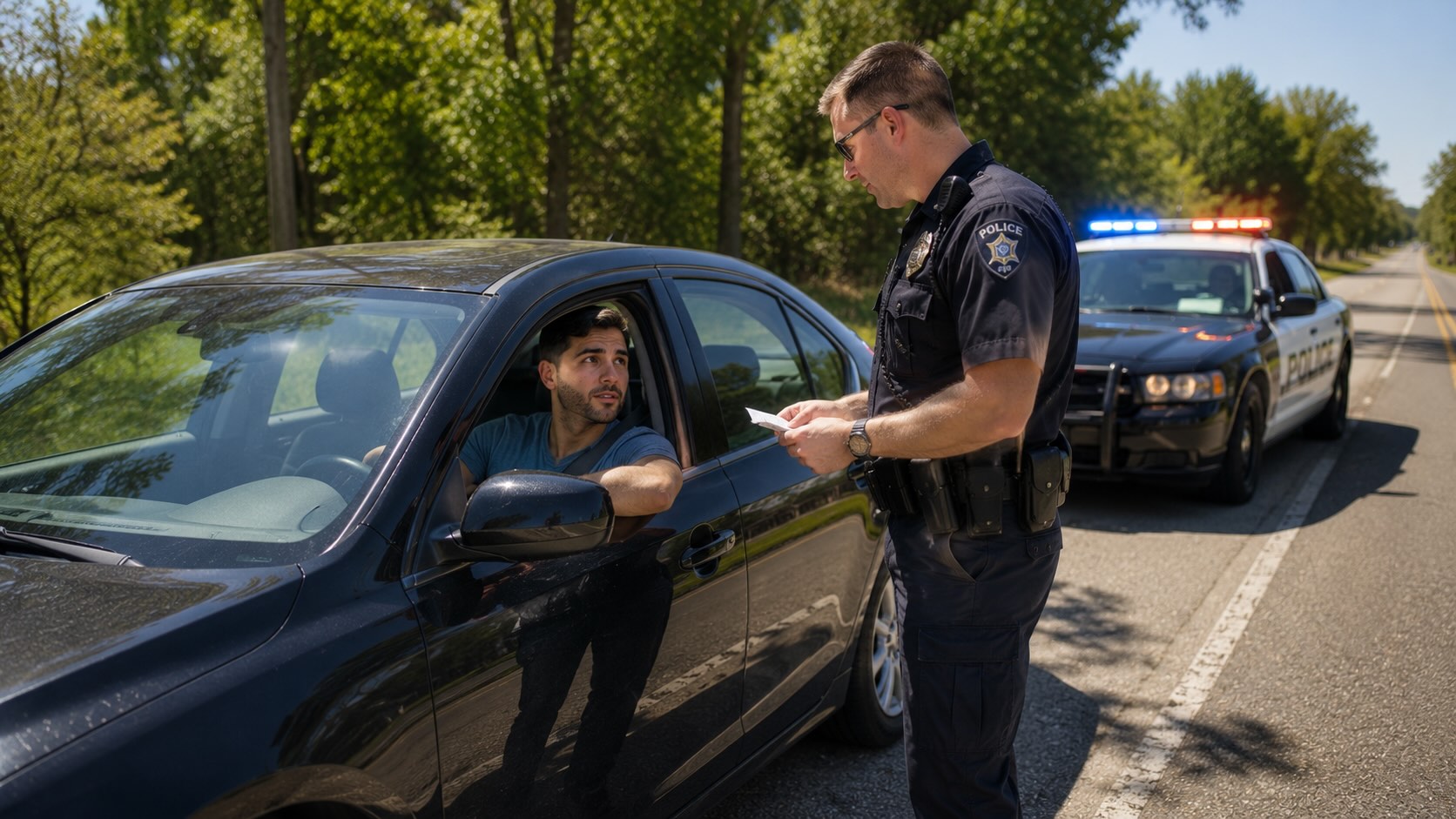
Wisconsin OWI laws work differently from drunk driving laws in most other states, and the differences matter a great deal if you have just been arrested. The charge is called OWI rather than DUI, a first offense is not handled as a crime, and how prior offenses are counted decides almost everything about what you are facing.
What follows is how the law is put together. If you were arrested in the last few days, skip to the final section first, because there are deadlines already running against you.
OWI, Not DUI
Wisconsin charges Operating While Intoxicated. You will hear DUI used casually, but the statutes and the courts use OWI, and it covers operating a motor vehicle while under the influence of alcohol, a controlled substance, or any other drug that renders a driver incapable of safe driving.
A related charge, operating with a Prohibited Alcohol Concentration, is frequently issued alongside OWI based on the same incident. The two are commonly charged together, though a person is not punished twice for the same conduct.
The Limits That Apply to You
The familiar threshold is 0.08, but it is not the only one:
- 0.08 — most drivers
- 0.04 — commercial drivers operating a commercial vehicle
- 0.02 — drivers with three or more prior countable offenses
- Zero tolerance — drivers under 21, under Wisconsin’s absolute sobriety law
You can also be convicted below the limit. If the state can show your ability to drive safely was impaired, a BAC under 0.08 does not by itself end the case.
Wisconsin’s First-Offense Rule
This is the part that surprises people. In Wisconsin, a first-offense OWI is generally a civil forfeiture, not a crime. Wisconsin is unusual in treating it this way. There is no jail exposure for a straightforward first offense, and it does not produce a criminal record in the way a misdemeanor does.
That does not make it trivial. A first offense still brings a fine, driver’s license revocation, an alcohol and drug assessment, and often an ignition interlock requirement depending on the circumstances. It also becomes a prior offense that shapes everything that follows.
The exception matters: if a passenger under 16 was in the vehicle, or if someone was injured, a first offense can be charged criminally.
How Prior Offenses Are Counted
This is where most of the real consequence lives, and it is the single most misunderstood part of Wisconsin OWI law.
For deciding whether a second offense is criminal, Wisconsin applies a ten-year look-back. A second offense within ten years of the first is a criminal misdemeanor. If more than ten years have passed, a second offense may be treated as a first-offense forfeiture again.
That ten-year window does not extend to later offenses. For a third or subsequent offense, prior convictions are counted over a lifetime, with no washout at all. A conviction from decades ago still counts. A fourth offense is charged as a felony.
Because the counting rules drive the charge, one of the first things worth examining in any OWI case is whether the state has counted the priors correctly. They are not always right.
Implied Consent and Refusing the Test
By driving on Wisconsin roads you have already consented to chemical testing of your breath, blood, or urine when an officer has lawfully arrested you for OWI. That is the implied consent law.
Refusing the test carries its own penalty, separate from the OWI charge itself, and typically a longer revocation than a failed test would have produced. A refusal also triggers a short window in which you must request a hearing, and missing it forfeits the challenge. People lose that right simply by not knowing the deadline existed.
You can be convicted of OWI even if you refused, and the refusal itself can be raised against you.
What a Conviction Brings
Penalties scale sharply with the offense number, but generally include some combination of:
- Fines and court costs, which rise substantially with each offense
- Driver’s license revocation, with an occupational license sometimes available
- An alcohol and other drug abuse assessment and a driver safety plan
- Ignition interlock device installation
- Jail or prison exposure from the second offense onward
- Substantially higher insurance costs for years
For commercial drivers, an OWI can end a career, and the commercial consequences can attach even when the offense occurred in a personal vehicle.
Where OWI Cases Are Actually Won
Defending an OWI is rarely about disputing that someone had been drinking. More often the questions are procedural:
- Was there a lawful basis for the traffic stop in the first place?
- Was there probable cause to arrest?
- Were field sobriety tests administered as they are supposed to be?
- Was the breath instrument properly calibrated and maintained?
- Was the blood draw handled and stored correctly?
- Have prior offenses been counted correctly for charging purposes?
Any one of these can change the charge, the exposure, or whether evidence comes in at all.
If You Have Just Been Arrested
Two deadlines run immediately, and both are easy to miss. There is a short window to request a hearing on your license revocation, and a separate one if you refused testing. Waiting until your first court date can mean losing those rights before you ever appear.
You can read more about how this firm handles these cases on the criminal defense page. Wisconsin’s OWI statutes and current penalty schedules are published by the Wisconsin Department of Transportation.
If you are not sure how many countable offenses you have, that is worth checking before your first court date rather than after it.